Absinthe Tails
Overview
Absinthe Tails is a detective game with a dash of absinthe and missing cats. As Claude, a detective with a penchant for spirits, your task is to unravel the mysteries surrounding your quaint town.
Collaborating with a team of five, my main responsibilities included designing UX and User flows on Figma , designing puzzles and development on Unity . A key aspect of My role was crafting tutorials to familiarize players with game mechanics, refined through extensive play-testing and feedback sessions.
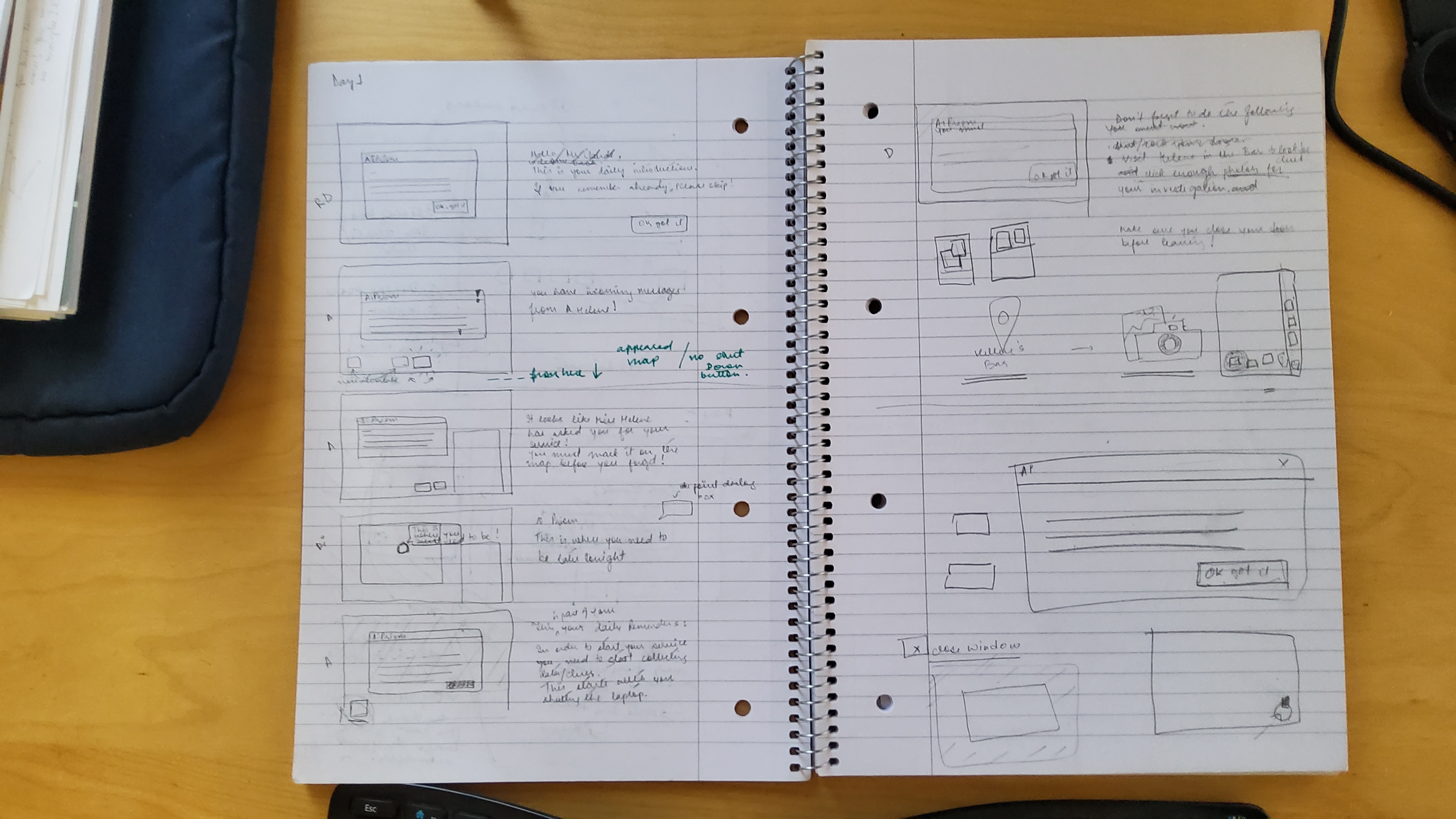
Initial design iterations on paper:
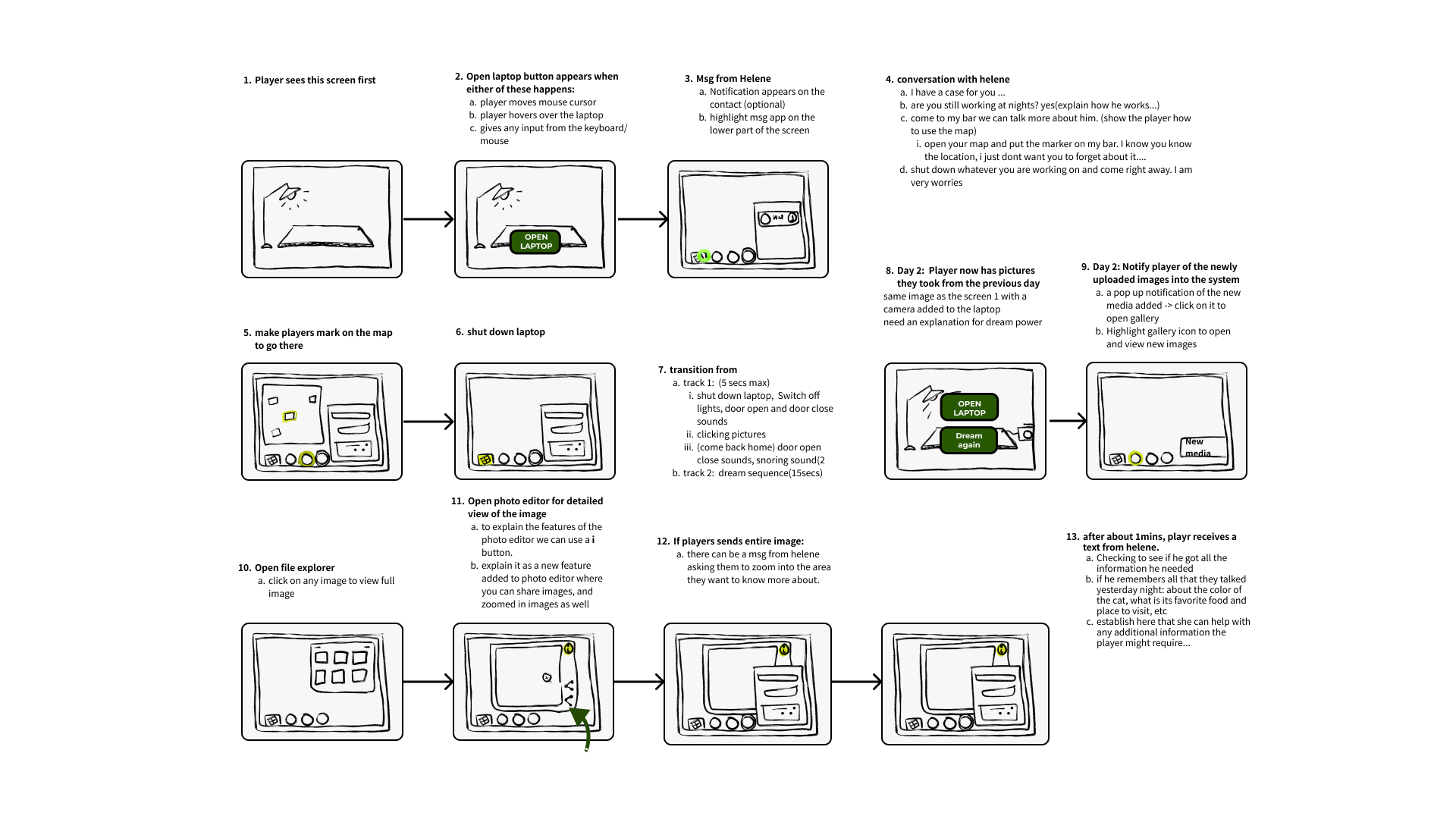
- User flow
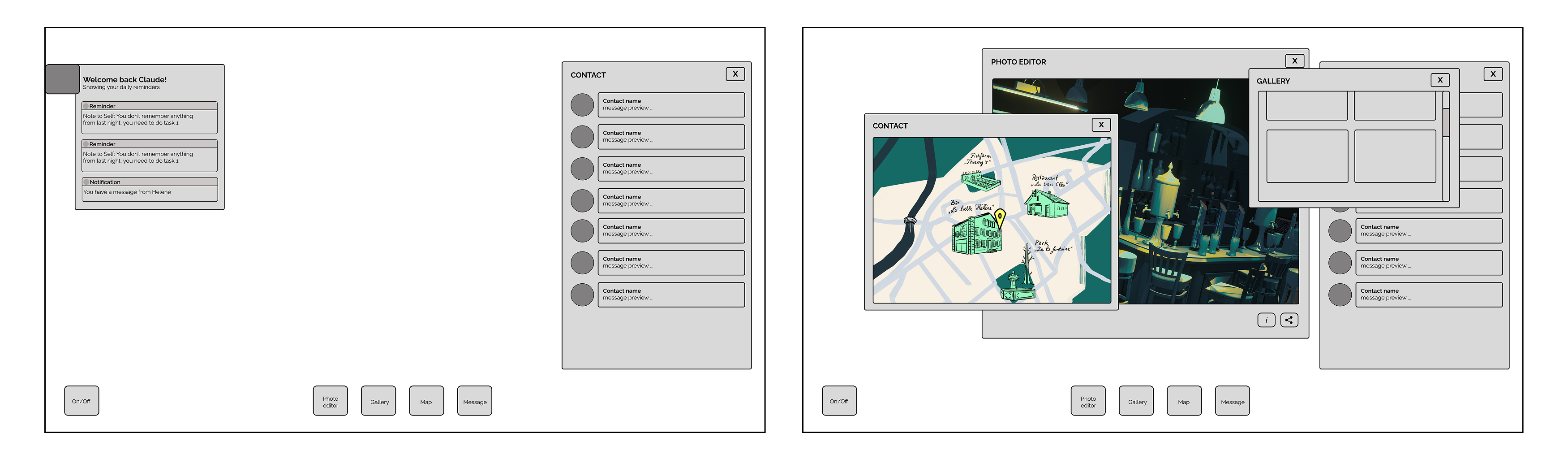
- Low fidelity mockups
Design Challenges and iterations
Challenges
How to convey to the player that, their character, has a few peculiar characteristics and behaviour:
- Your work is exclusively conducted under the shroud of night , often accompanied by a few indulgent glasses of absinthe to set the mood for unravelling mysteries.
- Despite your nocturnal adventures, your memory becomes hazy once the absinthe takes hold . To compensate, you rely on your trusty camera to capture as many clues as possible, reviewing them meticulously upon awakening, typically during daylight hours.
- A fascinating quirk of yours is your subconscious's remarkable ability to retain sounds from the night. These auditory snippets resurface as dreams, serving as invaluable clues. Fortunately, you can tap into these dreamscapes anytime through brief power naps.
Failed attempts, playtests and further iterations
Through three playtesting sessions, we tried different methods to convey crucial information. Initially, we used a messenger feature where NPCs subtly explained game mechanics, but this proved ineffective as players struggled to retain the information, disrupting the narrative flow.
ONE EUREKA MOMENT!!!
After careful deliberation, we segmented the AI-assistant feature into three distinct parts, each aimed at providing information to the user in the following ways:
-
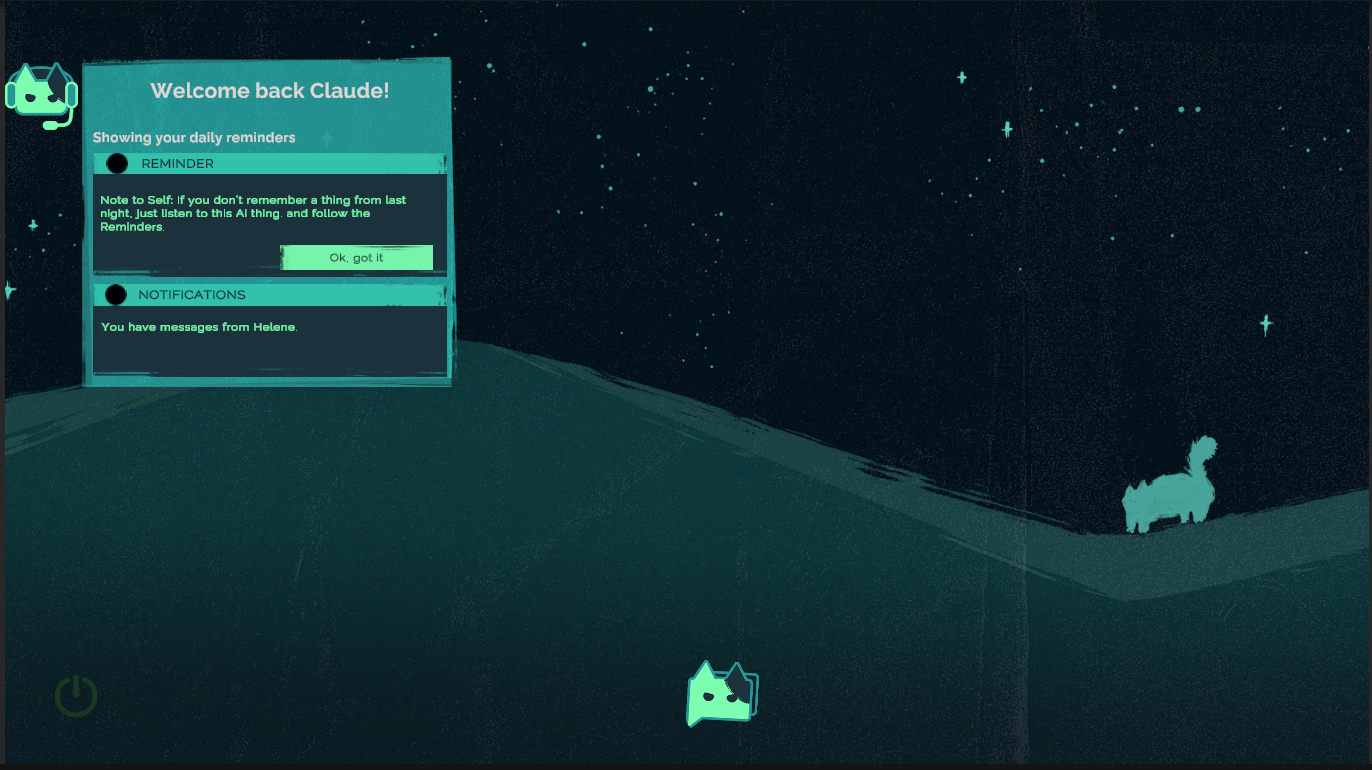
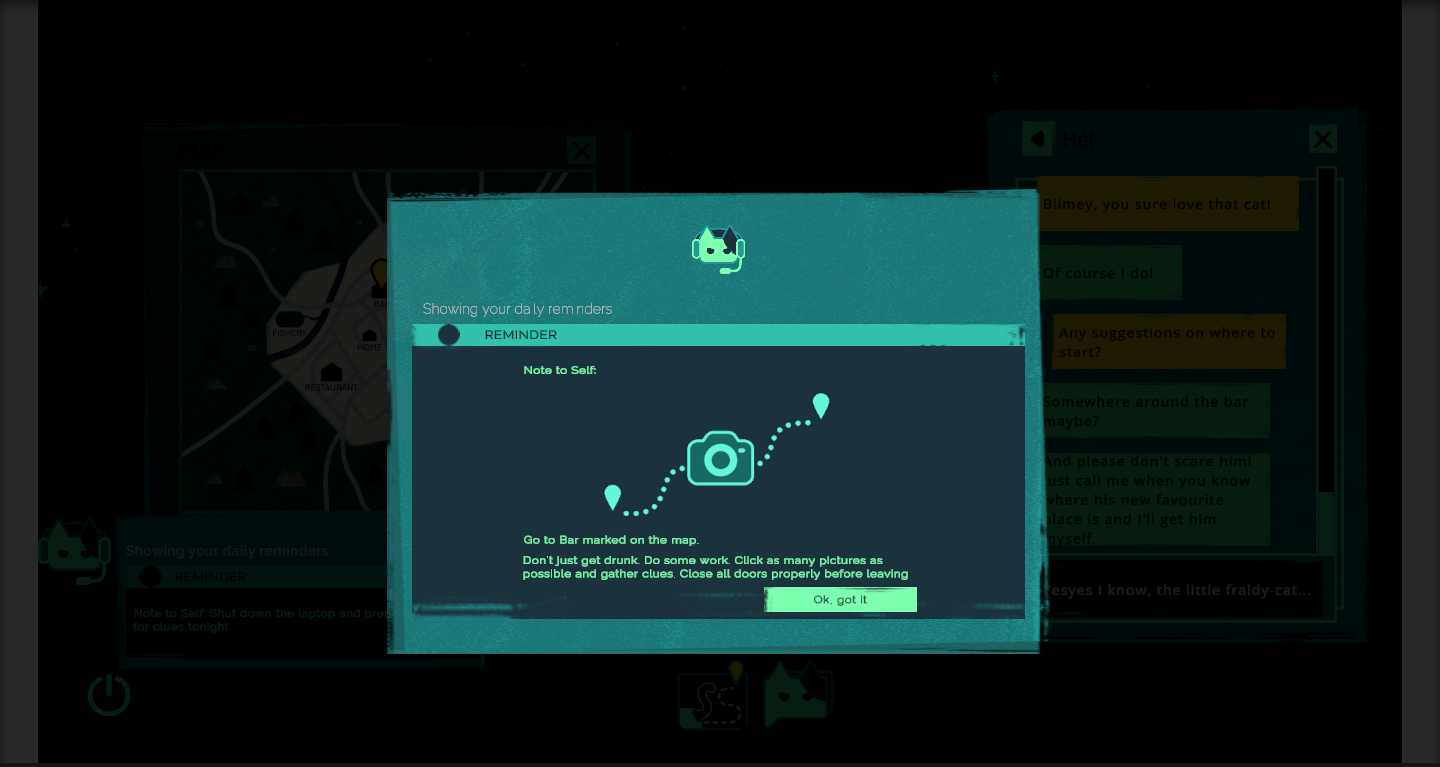
Main player characteristics and behaviour were introduced through reminders set by the protagonists themselves. These reminders, triggered upon laptop startup by the AI assistant, were particularly effective as the character, being aware of their intoxicated state, had set reminders to guide them through such moments. This served as an opportune space for us to introduce the character mechanics to the player.
-
Taking cues from the informative messages commonly found in Confirmation dialogue boxes of Mac and Windows systems, which typically provide updates or performance details before shutting down, we adopted a similar approach to inform the user about events occurring during the night. This facilitated an explanation of the aspect where the player captures pictures during the night, which can then be reviewed later.
-
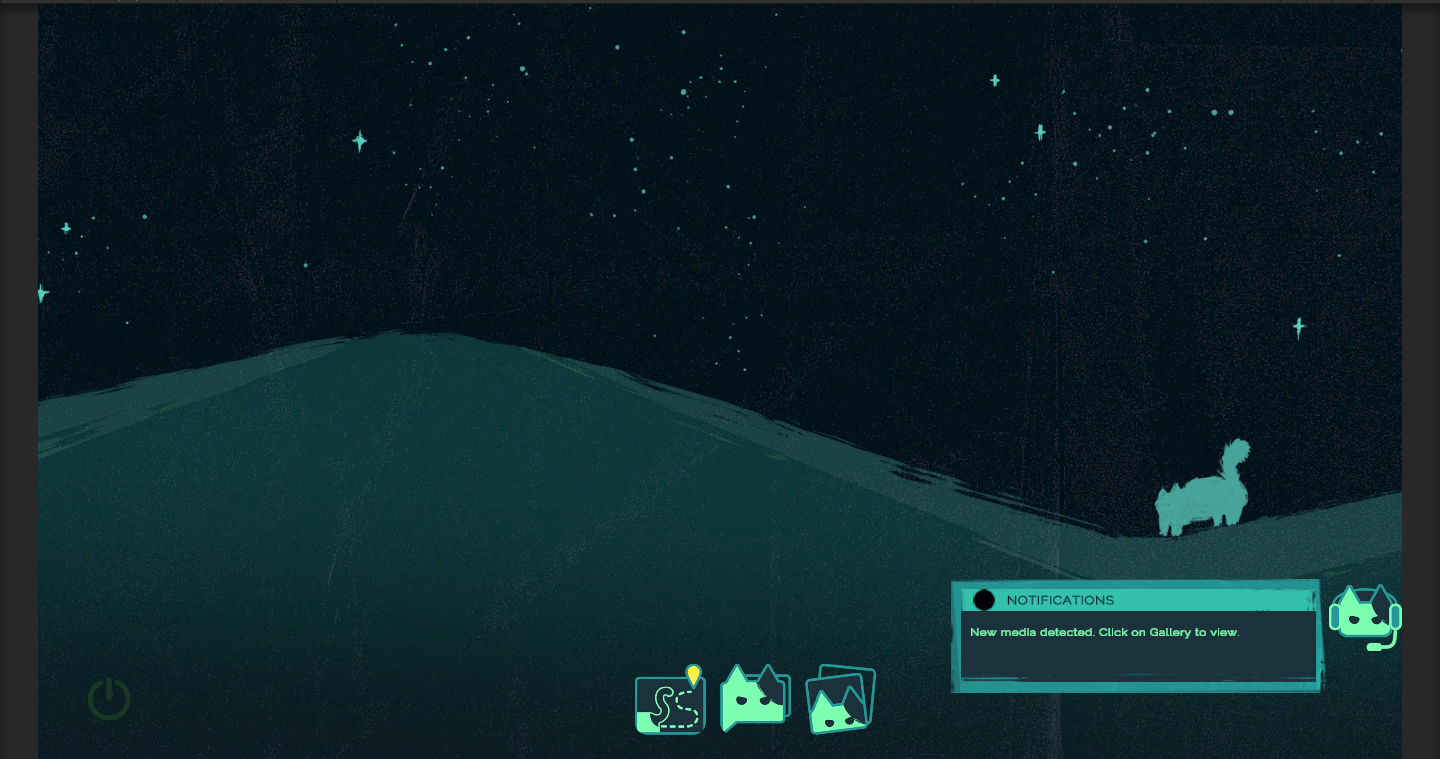
To ensure users retained information about upcoming functionalities, we implemented small notifications or tabs resembling UI overlays , strategically positioned just before the introduction of new features. This approach aimed to keep users informed about what to expect next.
Player feedback
I am very happy to say that out of many feedbacks, we received a,
“This game has nicely designed pace and great UX”
Players also found the micro-interactions added to the UI tutorials very helpful.
Tools
- Unity
- Figma
- Pen and paper
My responsibilities
- UX design
- Tutorial design
- Programming
FINAL demo
The project presented a fascinating array of challenges related to player experience. These challenges were not only interesting but also novel and distinctive. They provided my team and me with ample opportunities to delve into our bag of strategies and explore various solutions. To play, visit the game directly at Itchio Site .
Here are a few snippets from our demo day.
Please feel free to reach out if you would be interested in helping and collaborating with us in the project. :)
FIN.